 Happy Kids
Little Engineers
Right if your child likes taking things apart, has not built with gears before, or needs the win of finishing something in one go.
They leave with an instinct for how machines move, and the habit of changing one thing at a time.
Happy Kids Robotics runs three programs for students aged 6 to 14, all in the same Glendora lab, all hands on the hardware from the first session.
Little Engineers is where students meet the ideas that every robot sits on, through builds they can finish and test in a single session.
A claw that has to actually grip. A tug of war rig where the gear ratio decides who wins. A catapult that throws further when you move one pivot point. The build is simple. The reasoning behind it is not, and that is the part we are after.
Students learn to answer the question that never goes away in engineering: it did not work, so what are you going to change, and why that?
Session to build, test and rebuild
Prior experience assumed
VEX IQ is the core program. Students build a robot from the VEX IQ system, wire the motors and sensors, and program it to complete a task without anyone touching the controller.
The tasks are the fun part and the honest part. Follow a line. Clear a maze. Drive a square and come back to where you started, which sounds trivial until the robot drifts two inches on every turn and the student has to work out why.
Coding starts in blocks. When a student outgrows blocks, and they do, we move them to text. Sensors arrive the same way: when the student hits a problem that only a sensor solves.
First, then text when they are ready
The design decisions are the student's
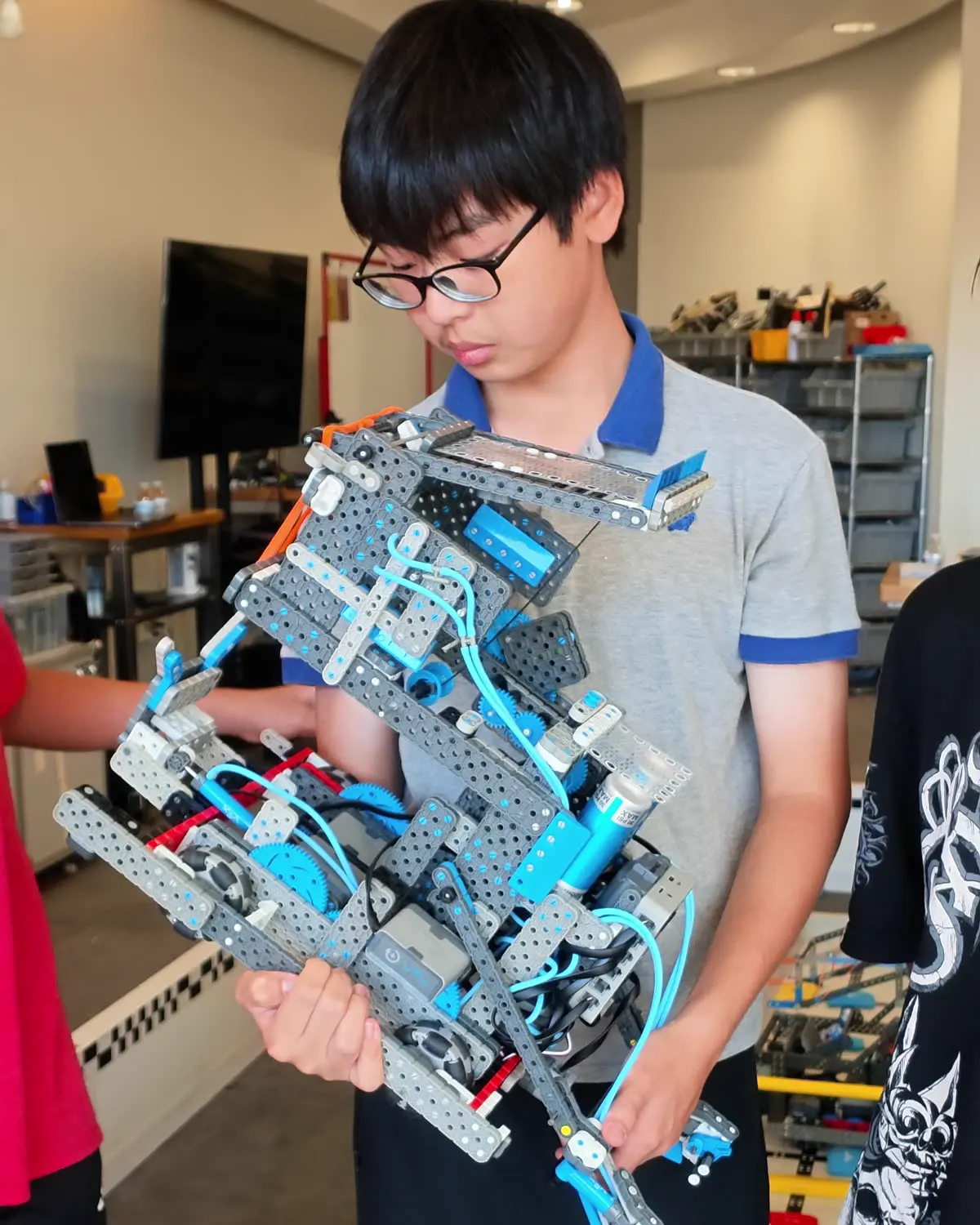
The competition team takes a VEX IQ game and runs it like a real engineering project: design, build, test, throw away, rebuild, drive practice, documentation, judge interview, tournament.
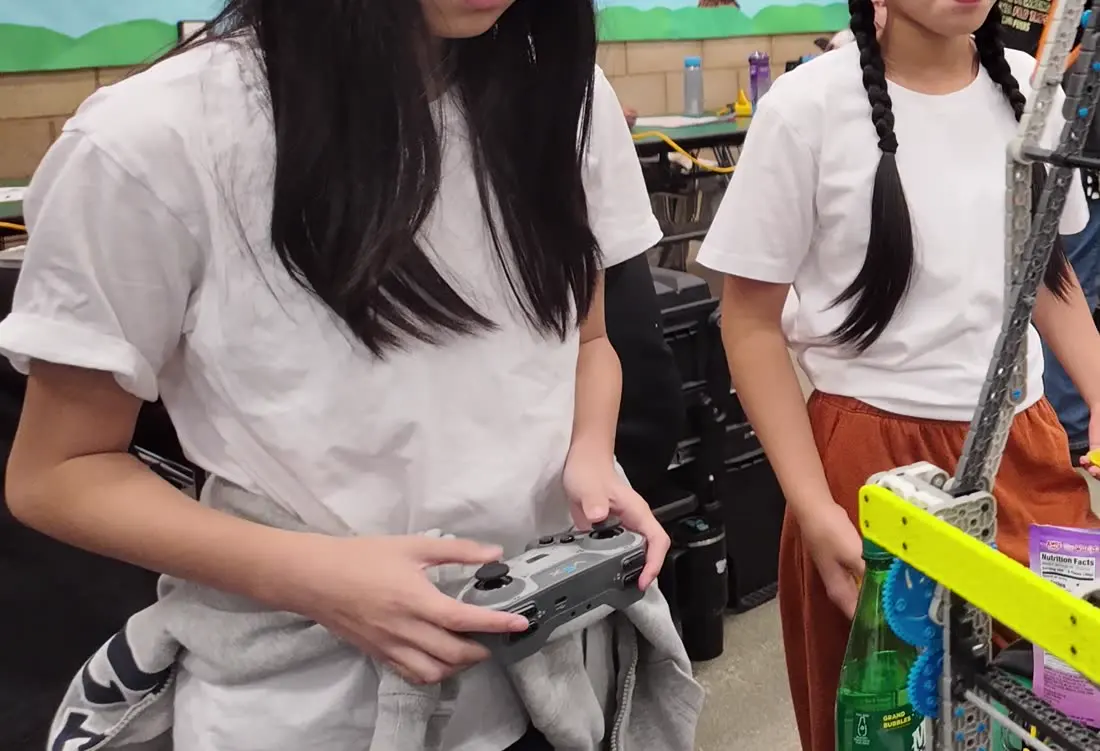
Each student takes a role and owns it. The driver practises the same forty seconds until it is muscle memory. The documenter keeps a notebook that gets judged. The coder debugs an autonomous routine the night before, which is a rite of passage in this sport.
They also learn to lose a match and get the robot back on the field in the next one. That is not a soft skill. That is the job.
The honest answer comes from watching them in a trial class. This is the rough shape of it.
Right if your child likes taking things apart, has not built with gears before, or needs the win of finishing something in one go.
They leave with an instinct for how machines move, and the habit of changing one thing at a time.
Right if your child wants a robot that is theirs, and is ready to keep working on something across weeks instead of one session.
They leave with a working robot, code they wrote, and the ability to debug something they built.
Right if your child wants a deadline, other teams to measure against, and a role they are accountable for.
They leave with a season behind them, a judged notebook, and the ability to explain a design decision to a stranger.
Memberships cover all three. Explorer is $280 a month, Innovator is $480 a month and includes Competition Prep, Champion is $899 a month. If you are not sure, start with a trial class.
We watch them build something first, in a trial class, and then we tell you. Age is a rough guide and nothing more. A seven year old who has been taking things apart since they could hold a screwdriver belongs in a different seat from a seven year old who has not, and both are welcome.
Little Engineers is about mechanisms. Students build a machine that does one thing, test it the same session, and learn why it worked. VEX IQ is about a robot: a chassis they own, motors and sensors they wire, and code they write to make it do a job without them touching it.
Both. Students start in blocks because it removes typing from the problem, and move to text when the block version starts getting in their way. That moment is different for every student and we do not force it.
Ask us when you visit. Group size changes with the session and the program, and we would rather tell you the real number for the class your child would actually be in than publish an average.