// Competition team

A season that ends in front of a referee

Our teams compete in VEX IQ, the elementary and middle school level of VEX Robotics. A season means designing a robot for that year's game, building it, rebuilding it, and taking it to tournaments against other teams.

2

Teams, elementary and middle school

5

Roles on a team, every one of them accountable

1

Engineering notebook per team, and it is judged

VEX IQ

The competition we build for

// 01 · The teams

Two teams, two very different rooms

Same lab, same field, completely different energy.

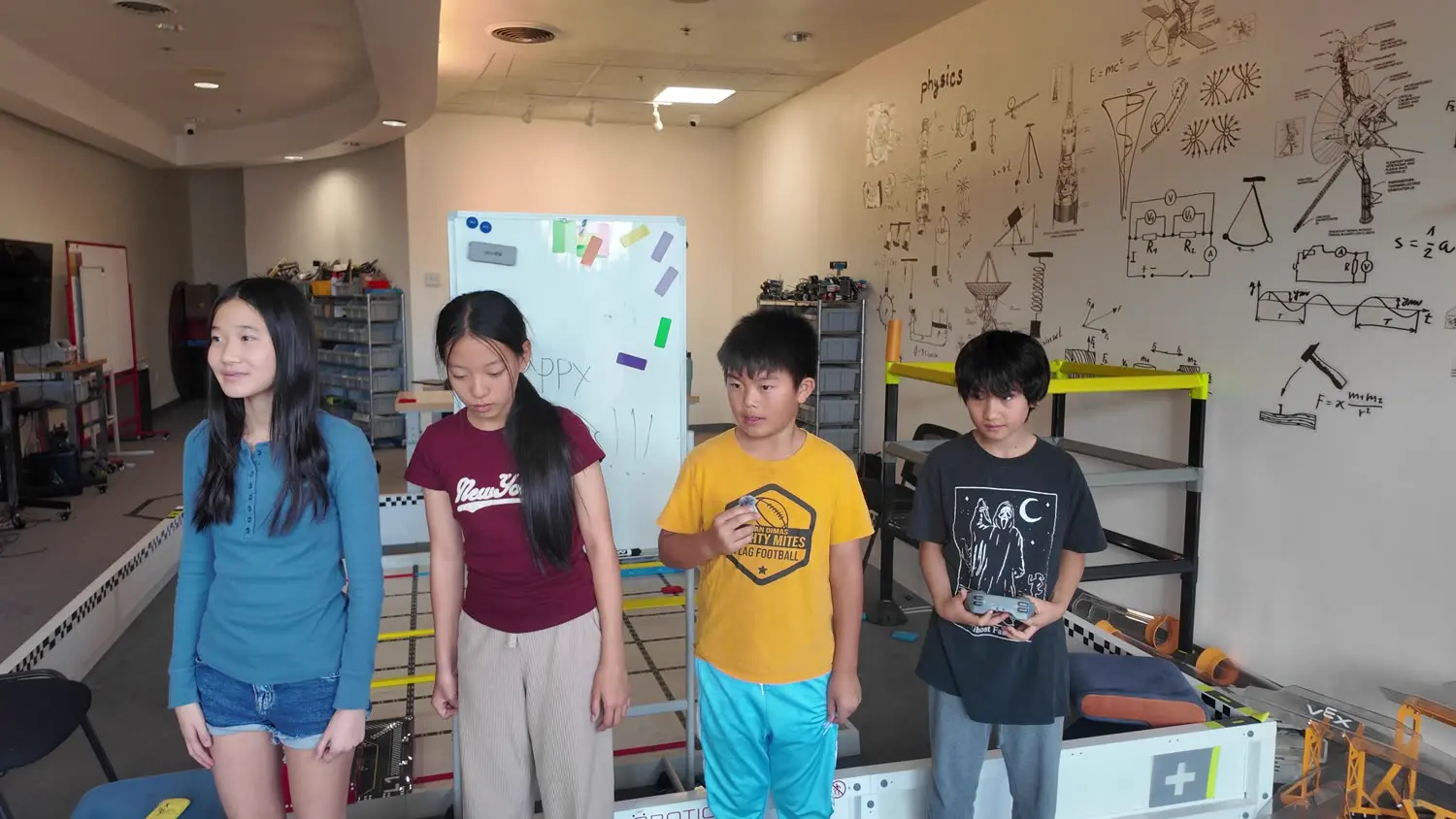
The Happy Kids Robotics elementary competition team standing in the Glendora lab
ElementaryTeam 61319G

Happy Pickles

Four students, one robot called Pickleball. It carries an arm and a catapult, with an intake in the middle that feeds whichever one they want to use. The arm scores high, the catapult covers the lower levels.

Their drivetrain took a month. They built the same side twice, realised it had to be mirrored, and started again. Ask them about the intake jamming and you will get a very detailed answer.
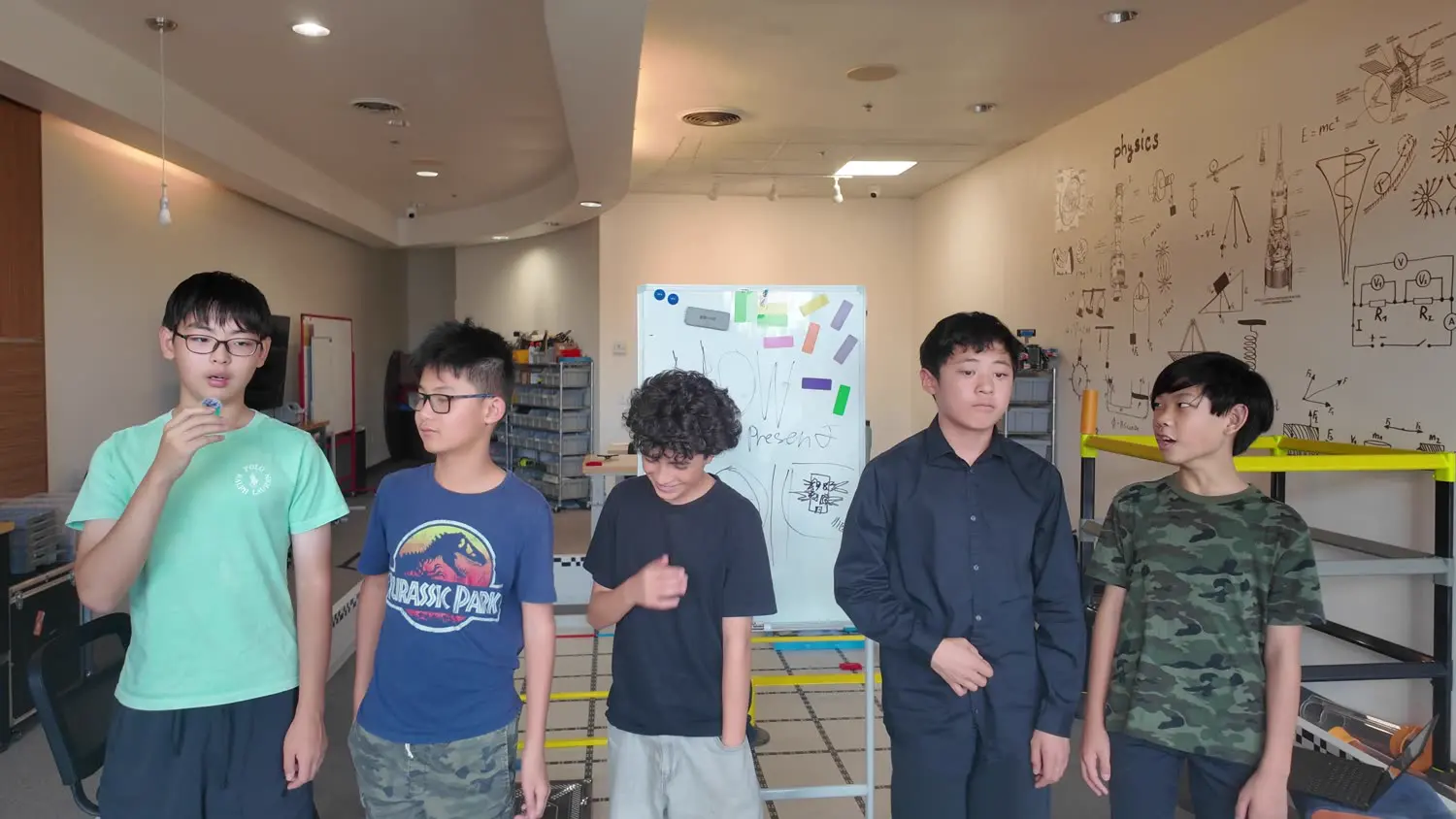
The Happy Kids Robotics middle school competition team standing in the Glendora lab in front of the VEX field
Middle schoolTeam 61319X

Team HK

Five students and a catapult with two modes, switched from the controller. Their match plan runs on arithmetic: get all three of the right bags onto the top level and that is 48 points.

The part they are proudest of is a bar one of them designed to take the slack out of the catapult string, which stopped it misfiring. Nobody told them to build it.

Students are referred to by team, not by name. We do not publish students' names or close-up photographs without a parent's written permission.

// 02 · The season

What the months actually look like

Phase 01

Read the game

Every VEX IQ season has a new game with its own scoring rules. Before anyone picks up a beam, the team works out where the points are and what kind of robot collects them fastest. Most bad robots are the answer to a question nobody checked.

Phase 02

Build, fail, build again

First versions are meant to be wrong. The team builds a mechanism, runs it, finds the failure, and changes one thing. Then again. A season has dozens of these loops and the notebook records all of them.

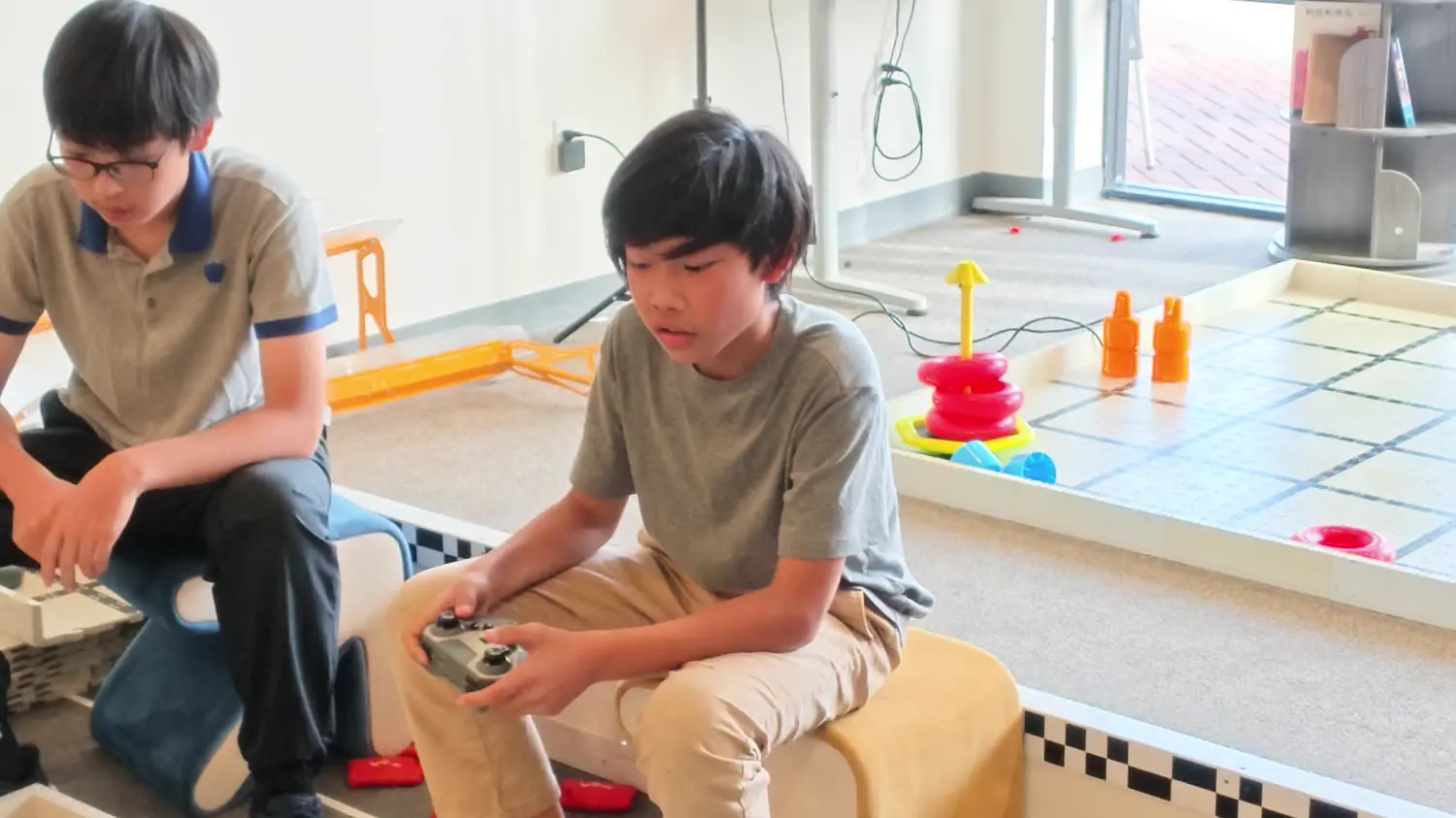
Two Happy Kids Robotics students sitting at the edge of the VEX IQ field with controllers, running drive practice
Phase 03

Drive practice

Driving looks easy until the clock starts. Drivers run the same routine over and over so that under pressure the hands already know it. The second driver learns the tricks that are not in any manual, like using momentum to push a bag further than a straight shot would.

Phase 04

Say it out loud

We rehearse the judge interview. Each student has to explain their own part: what it does, why it is built that way, what they would change with one more week. Nobody reads from a script, because judges ask follow-up questions.

// 03 · Tournament day

Nine in the morning to the afternoon, on their feet

A tournament is a long day in a crowded room. Pit tables down both sides, a hundred kids, parents, and a field in the middle with a referee and a scoreboard.

The students carry the robot in, set up their table, and then handle whatever the day gives them. A motor dies between matches. A part shears. The schedule moves. Nobody at the pit table is going to solve it for them, and that is the point of being there.

By the time they go home they have done something that most adults do not do in a year: shipped a thing they built, in public, against a deadline, and then explained it to a stranger.

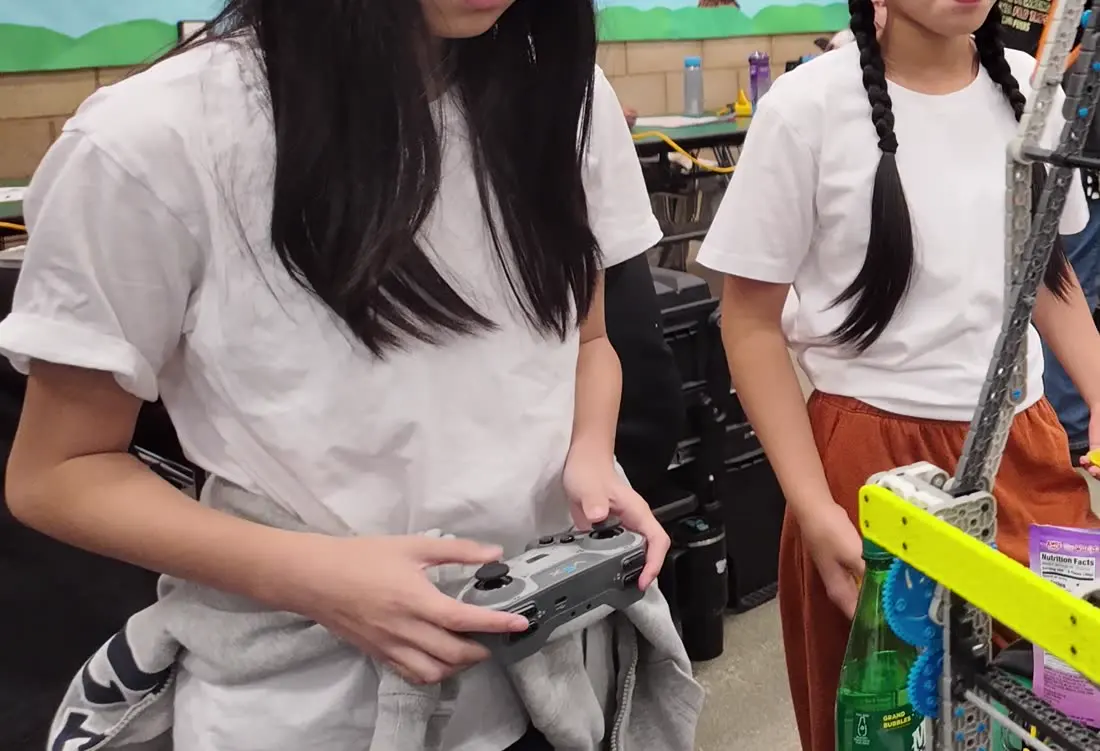
In the pit Students from Happy Kids Robotics adjusting their robot at a pit table during a VEX IQ tournament
Between matches, fixing what broke
// Questions

About competing

What is a VEX IQ competition day actually like?

You arrive in the morning and set up at a pit table with your kit, your spare parts and your notebook. Matches run on a schedule all day, each one a couple of minutes long, with a scoreboard on the wall and referees on the field. Between matches the team fixes whatever broke. Somewhere in the day a judge comes to the pit and interviews the students about their robot.

What is a judge interview and why does it matter?

A judge interview is a conversation where the team explains their robot and their season: what it does, how they built it, what they would change, what they are proudest of. Judged awards are decided on this and on the engineering notebook, not only on match scores. It is also the part that teaches the most, because a student cannot fake understanding of something out loud.

Does my child need to be on a team to take classes?

No. Weekly classes run on their own and most students are not on a team. Competition is for the students who want that kind of pressure and that kind of deadline.

How much travel is involved?

Tournaments are local to Southern California. Ask us about the current season calendar before you commit, so you know the Saturdays in advance.